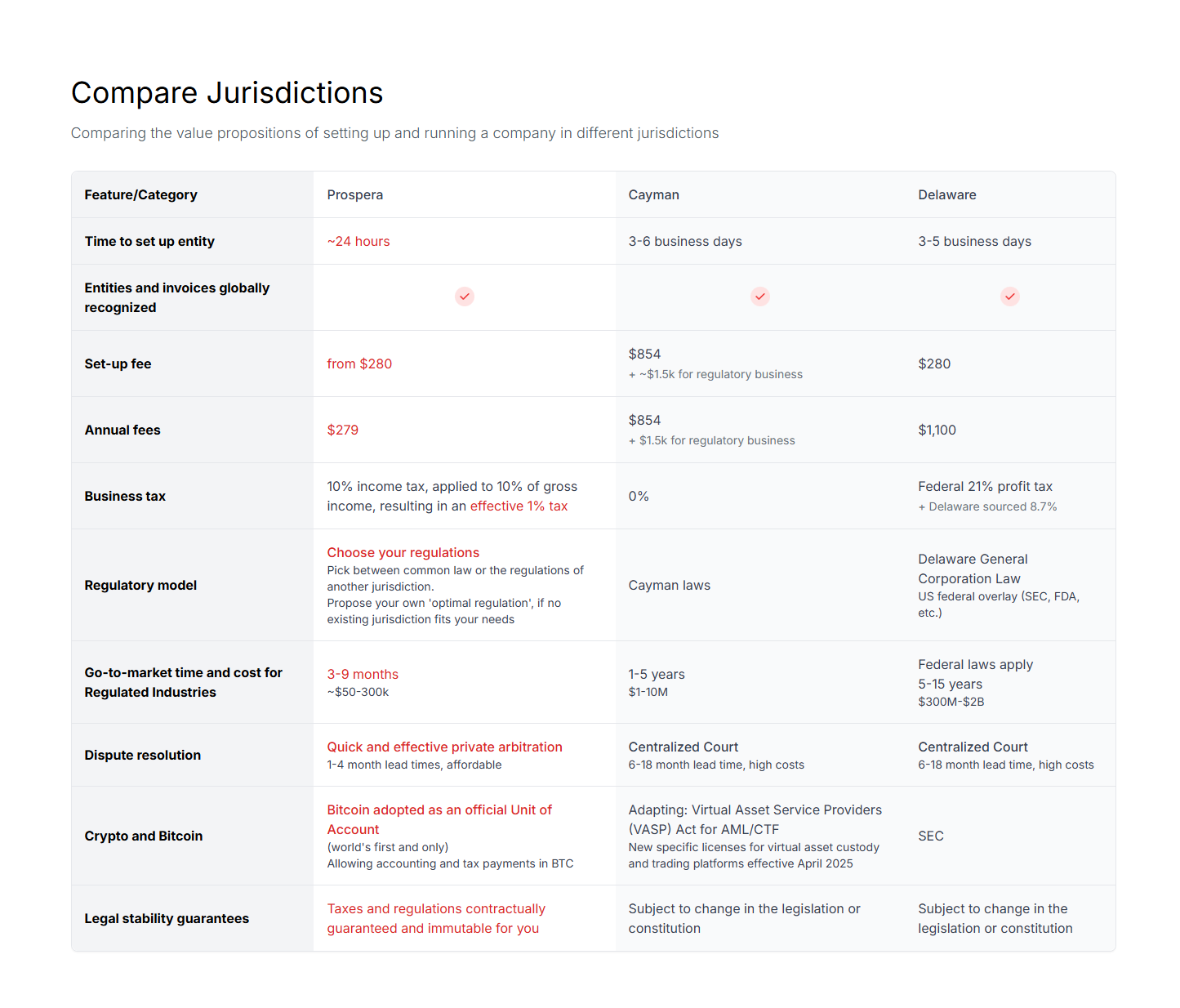
I’m starting here a new post so we can settle all discussions for the location of the new Radix Organisation that will take over assets from the current Radix Foundation.
Below is a short summary of what i’ve heard so far in the community, but please post your Proposals for locations and bring strong arguments on why you think this is the best.
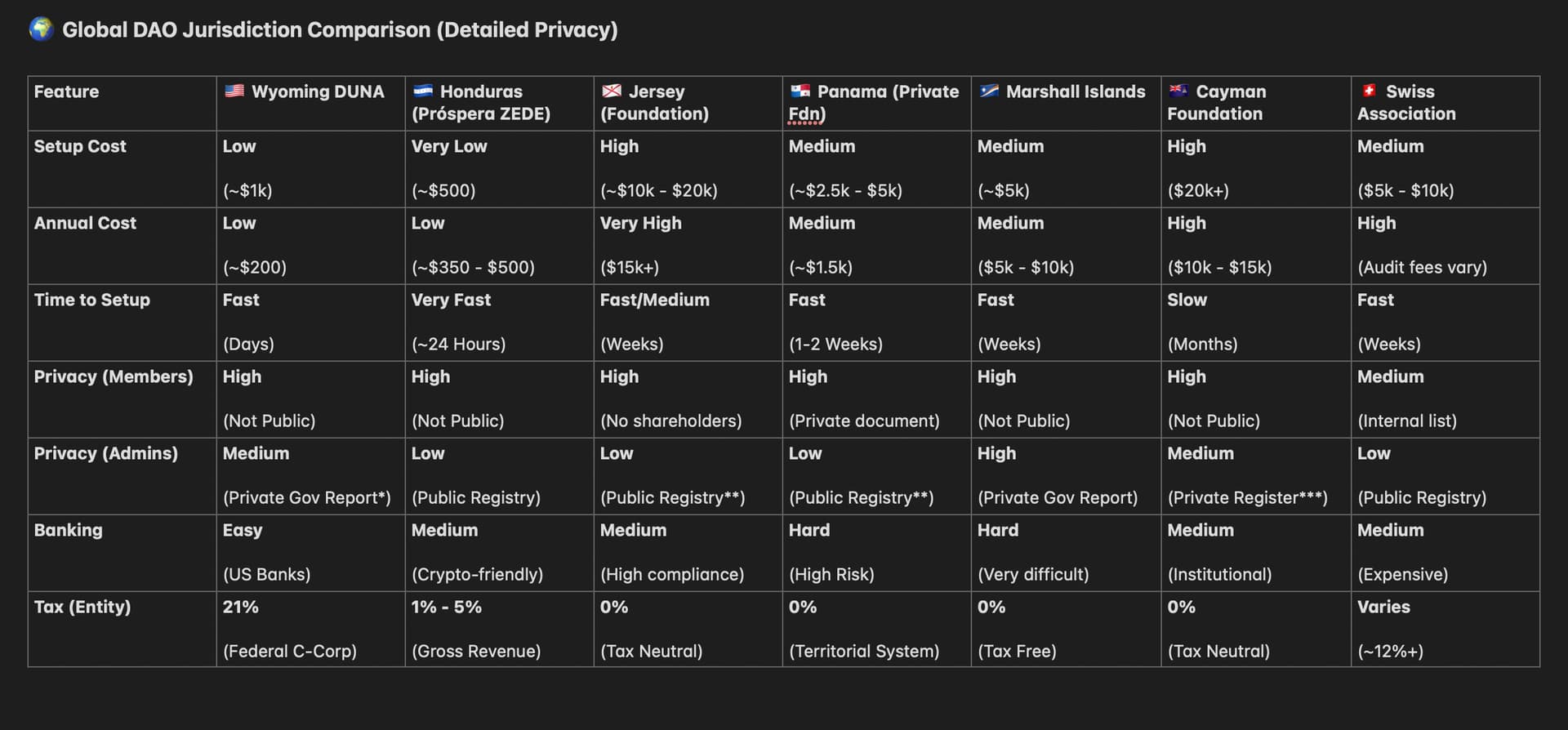
Consider: Privacy for Members, Duties and KYC for Administrators elected, Cost to form and operate annualy, Time it takes, Opportunities to attract VCs and investments, Regulation, Networking, etc.
There is not a perfect location, so we have to decide on what might fit our goals going further better.
Wyoming DUNA (USA): The best “bang for your buck” legal shield. Cheap and legally robust, but requires you to dox admins to the US government.
Honduras (Próspera ZEDE): The experimental “Crypto City” option. Fastest setup and Bitcoin is legal tender, but comes with political uncertainty.
Jersey (Channel Islands): The “Premium” option. Expensive and bureaucratic, but highly respected by European banks and regulators.
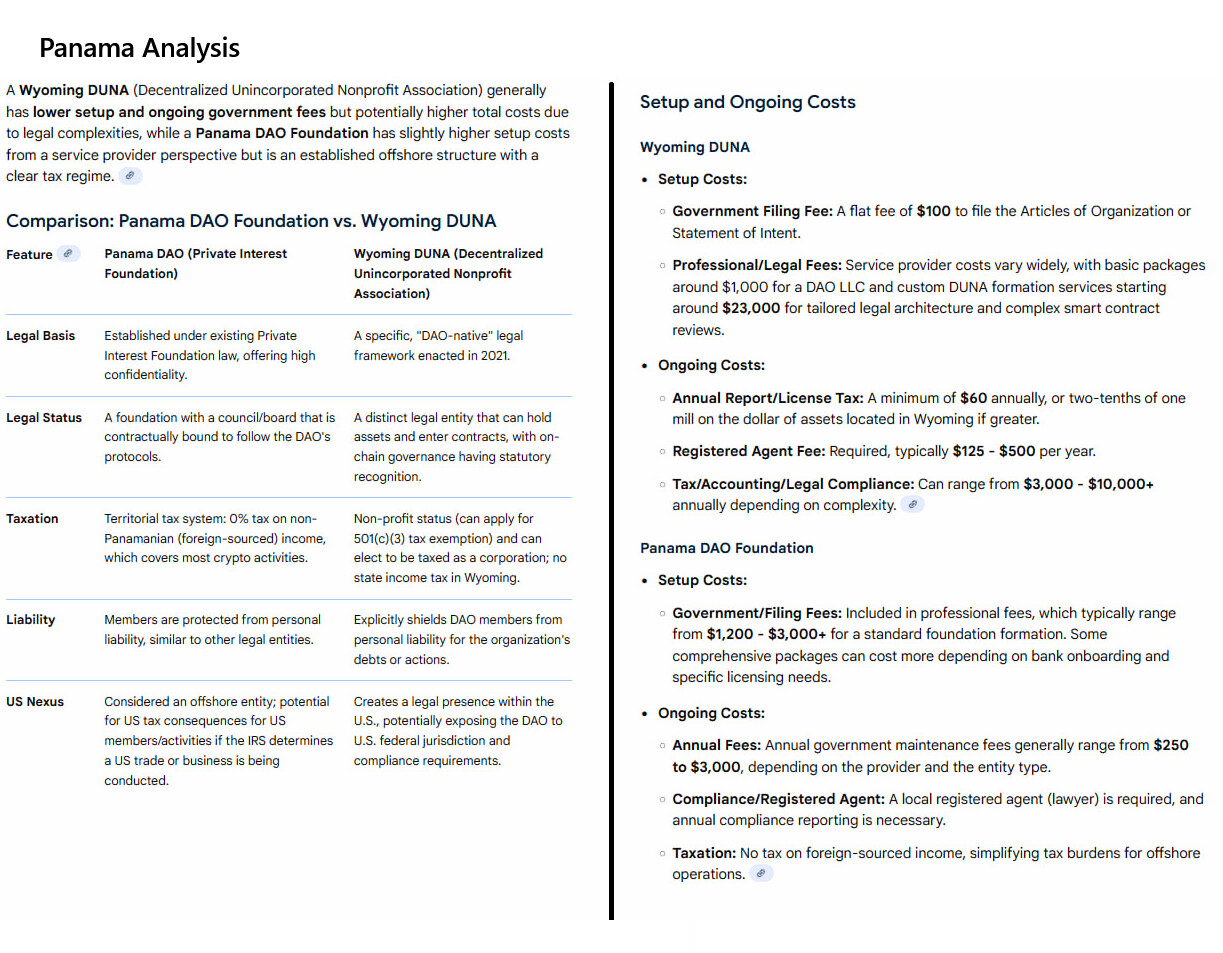
Panama: The “Old School” offshore option. Great for privacy and asset protection, but very hard to open a bank account.
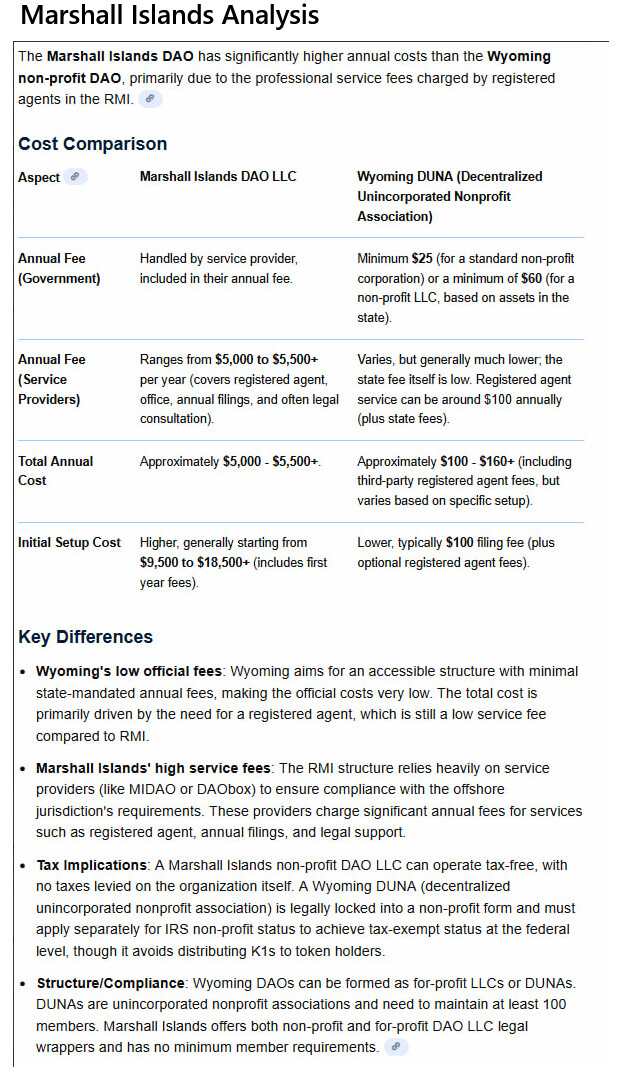
Marshall Islands: The “Digital Native” offshore option. Created specifically for DAOs to be fast and private, but lacks banking infrastructure.
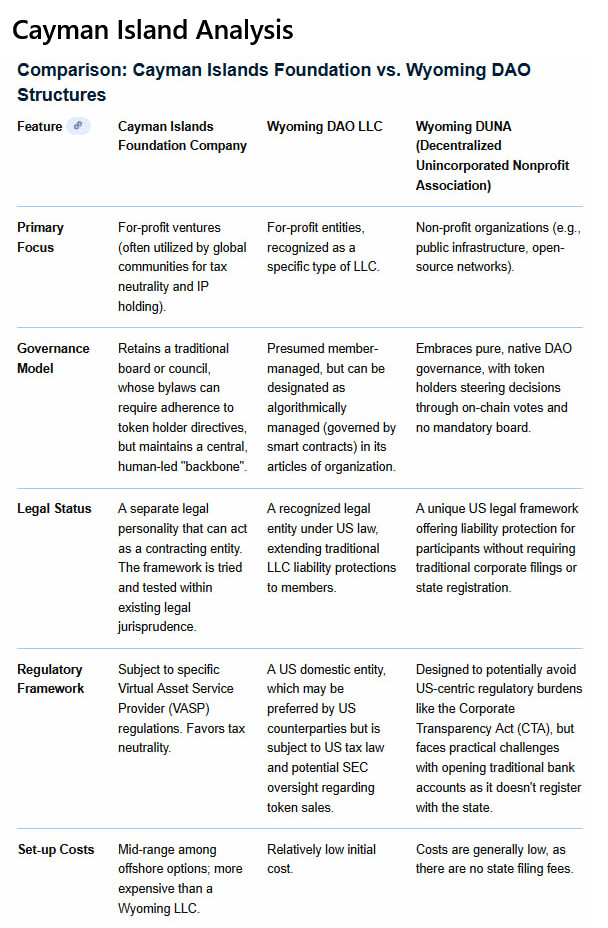
Cayman Islands: The “VC Standard.” If you are raising $10M+ from institutional investors, they will likely force you to use this structure. It is expensive but standardizes everything for investors.
Switzerland: The “OG Crypto Valley.” Ideal for non-profits (Social DAOs) or massive protocols (like Ethereum/Polkadot) that need a physical headquarters in Europe.
Please add Próspera ZEDE in Honduras to the set, I’ll get you the relevant info when I can.
It’s the only option on par with WY, it’s just a little less effective in Liability shielding and carries more political risk.
It’s called Ricardian LLC and it was specifically designed for DAOs and crypto, it even has some more advanced stuff than WY … but it incorporates.
I’ll drop the info, but general links:
we probably have to establish priorities. In my opinion, we need to set real DAO and not pseudoDAO. So we need jurisdictions with clear DAO rules. I will be honest and say that i haven’t delved deep in comparisons but from the tables above some jurisdictions are not really suitable. If we register Foundation or Limited style company and then run DAO with inner rule set then it is no point of choosing country , just look where it is cheaper. But if we want DAO with legally enforced rules we need to choose jurisdiction which has elaborated , functional environment for that. Cost comes as second. I think it is very important decision for future. If we are placing community first and want to message this to the world we need strong trusted legal framework. If new people will want to join our ecosystem they will see clear transparent rules enforced on governmental level, not just company level.
Most options are Wrappers! Even some that have specific DAO provisions and explicit mention.
SO, any wrapper-like option means there’s a regular LLC and a provision to use code/smart-contracts as a basis … but the decisions are still considered to be the responsibility of the appointed administrators
From all I could find, only two options were actually designed as DAO-native and include/require smart-contracts as the basis for decision voting and enforcement.
Wyoming’s UNA/DUNA , in the US
Próspera’s ZEDE Ricardian LLC , in the Honduras
WY as the better shielding, doesn’t incorporate (The U part stand for that), only DAO-owned assets are ever at risk and the decision-making is supported to be an outcome of a smart-contract process; regulation, taxes and compliance are clear and stable but potentially complex; political risk exists for next period if the US administration changes radically and/or if the rest of the world decides to start treating the US as a “toxic” jurisdiction.
Próspera has the advantage that we can go full-crypto because BTC is legal tender, but does incorporate, so slightly less shielding; DAO is the written/provisioned system for decision-making; regulation, taxes and compliance are clear and stable and simpler than US; Political risk is high because the HN gov is still actively legally pursuing the ZEDE as it does not want to accept the full breath of it status. Should there be a turn in decision in favor of the gov, it’s not clear what happens to the entities created therein, but so far, the HN gov has lost all processes and appeals.
There’s a discussion in the official radix telegram channel about where to relocate the foundation to.
It’s currently in jersey.
I ran my own licensed fiduciary service provider in the isle of man for many years.
People generally use offshore structures for privacy, to protect assets and to avoid/mitigate taxation.
On the basis that radix is left with no, or very little fiat, it really only needs a bank account to pay for key services and a legal front/face to make official announcements.
The infrastructure and development is already decentralised and in many cases being paid for by its own members.
So it’s not an easy target for the SEC even if it was based in the US now.
Foundations and other offshore legal structures are really for the benefit of the founders and in radix’s case these have either bailed or died.
I don’t think the USA is a bad option and if radix ends up having to deal with the SEC, i think that this will be a “quality” problem arising from its success and will be dealt with accordingly.
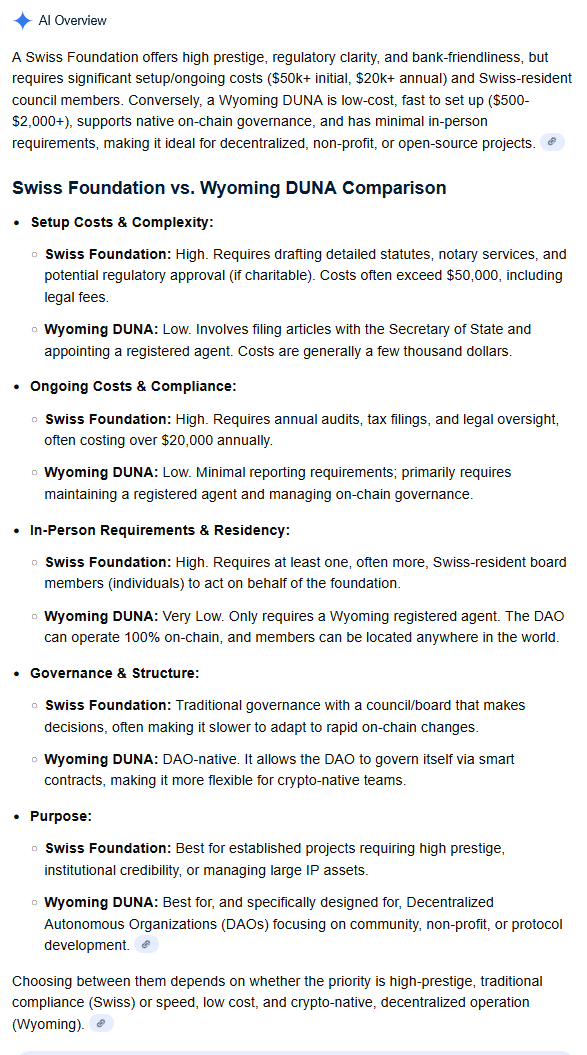
Peachy, assuming you have it, can you run the same prompt you did for Cayman, Marshall etc for Switzerland. May be more neutral safe option, but probably high costs and Swiss director but just to check it.
Now I’m curious what that AI would tell you with the exact same prompt but using Próspera’s ZEDE in Roatán Island in Honduras
How will it compose the comparison and give a differentiated scenario for choosing?
As I already established, the political risks are the issue with Póspera.
See? what I find odd is the lack of consistency between each comparison … wrt the DUNA.
I really don’t trust the AI comparisons, that’s all.
But I did read the materials on the DUNA and also some of the stuff on Próspera.
Guess all I’m advocating is that we really can’t just decide on the quick witty AI comparisons has being factual
Cheers and thanks, I’m still a DUNA supporter regardless